Spill Control Challenges – 10 Most Common Re-occurring Issues
Health, Safety and Environmental (HSE) teams are responsible for managing a wide range of operational, compliance and safety requirements across their organisation. With so many competing priorities, it’s understandable that spill control can sometimes slip down the agenda.
However, effective spill management is not something businesses can afford to overlook. Poor spill preparedness can lead to workplace injuries, environmental contamination, disruption to operations, costly clean-up activities, damage to company reputation, and potential regulatory action.
Whether you’re working towards ISO 14001 environmental objectives, managing hazardous substances under COSHH, or simply striving to create a safer workplace, maintaining robust spill control measures is essential.
After supporting organisations across a variety of sectors, including, manufacturing, logistics, warehousing, engineering, automotive, and construction, throughout the UK, the Spillcraft team frequently encounters the same spill management challenges time and time again.
Do any of these issues sound familiar?
10 Common Spill Control Challenges:
- Using the wrong spill response products for the hazard
- Spill kits that are poorly maintained or incomplete
- Insufficient spill response equipment available on-site
- Employees unsure which spill products to use
- Inconsistent spill management standards across different departments or locations
- Limited spill response training and awareness
- Spill kits not replenished after use
- Emergency spill kits being used for everyday leaks and housekeeping tasks
- Spill kits becoming general waste bins
- Drains and environmental protection measures not being regularly inspected
If you’ve identified with one or more of these challenges, you’re certainly not alone.
Why Good Spill Control Must Be Continuously Maintained
One of the biggest misconceptions we see is that once spill kits have been installed, the problem has been solved. In reality, spill preparedness requires ongoing attention.
Facilities evolve, processes change, new equipment is installed, chemicals are introduced or replaced, staff move roles, and equipment deteriorates over time. Without regular review, even a well-designed spill response system can quickly become out-dated or ineffective.
Maintaining effective spill control delivers several important benefits:
- Protecting Your People: Spills create immediate risks to employees, contractors and visitors. Slips, trips, falls, chemical exposure and manual handling incidents can all arise from poorly managed spills. Having the correct equipment available and ensuring staff know how to respond safely can significantly reduce the risk of injury.
- Protecting the Environment: Even relatively small spills can have serious environmental consequences if they enter drains, watercourses or surrounding land. Effective spill response measures help prevent pollution incidents and demonstrate a commitment to environmental responsibility.
- Supporting Compliance: Organisations operating under ISO 14001 environmental management systems, COSHH requirements and wider environmental legislation must demonstrate that appropriate controls are in place to prevent and respond to spills. Regularly maintained spill equipment, documented procedures and trained personnel all contribute to a stronger compliance position.
- Reducing Operational Disruption: Spills can halt production, impact service delivery and divert valuable resources away from day-to-day operations. A well-prepared spill response strategy helps minimise downtime and enables incidents to be managed quickly and effectively.
- Protecting Your Reputation: In today’s business environment, environmental and safety performance is under greater scrutiny than ever before. Demonstrating strong spill control practices helps protect your brand reputation and reinforces confidence among customers, stakeholders and regulators.
How Can You Improve Spill Control Management?
The good news is that many of the most common spill control challenges can be resolved through simple improvements in spill procedures, training, equipment maintenance, regular audits and site planning.
To help organisations strengthen their spill preparedness, we’ve developed several useful free tools:
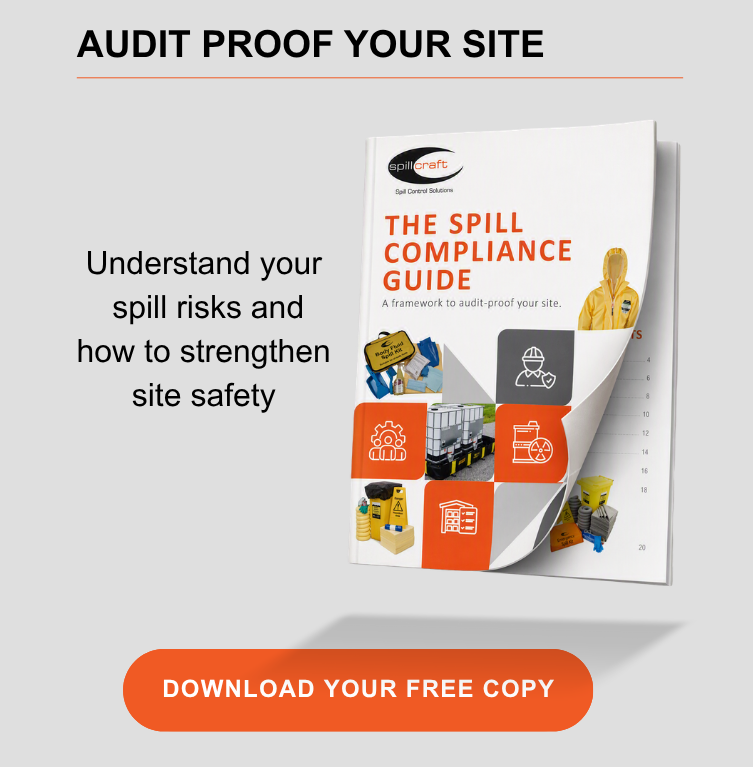
- A practical spill compliance guide, which explains key areas that can affect a site’s spill readiness.
- A spill risk assessment that enables you to understand areas of risks.
- Blog articles detailing various issues and helpful tips around spill control and compliance.
Worried About Your Spill Risks on Site?
Take our FREE Spill Risk assessment
The easiest way to assess your current spill preparedness is by completing our spill risk assessment.
In just a few minutes, you’ll receive an overview score on key areas of spill control, helping you to make improvements to enhance safety, environmental protection and emergency preparedness across your site.
Need Expert Guidance to Improve Your Spill Control?
At Spillcraft, we’re passionate about helping organisations improve their spill preparedness, protect the environment and create safer working environments for everyone.
If you’d like advice on spill kits, spill response planning, site assessments, drain protection, spill response training or compliance requirements, our experienced team are here to help.
T: 01606 352 679
E: sales@spillcraft.co.uk