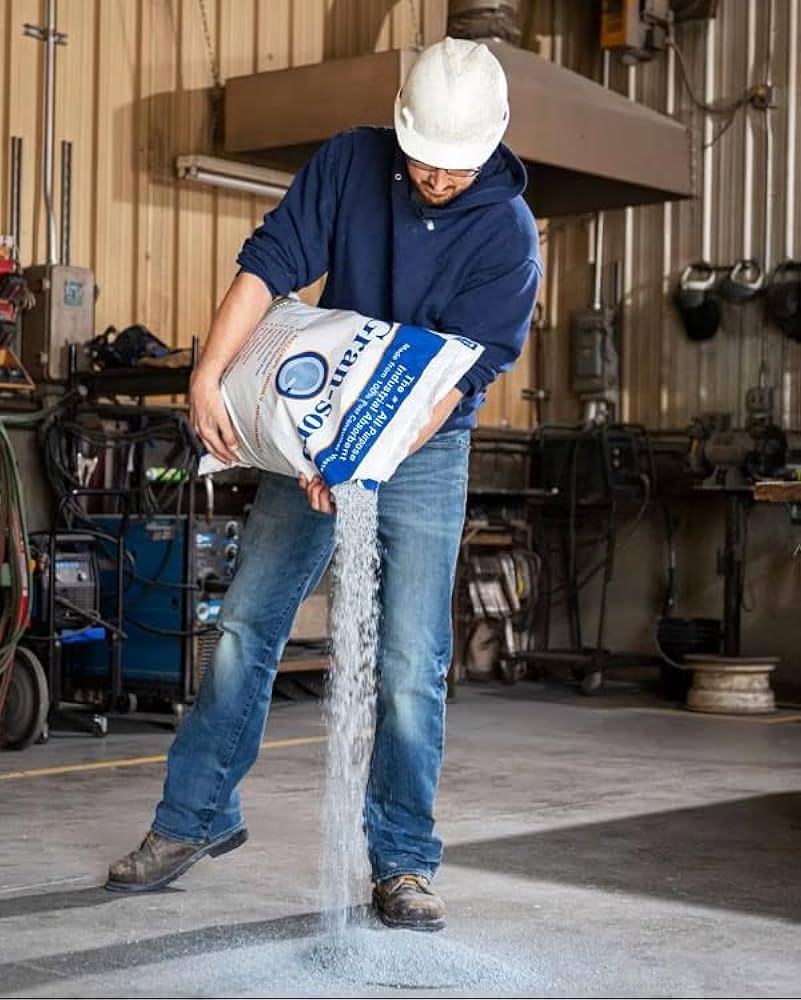
Knowing how to use oil absorbent granules correctly is an essential part of maintaining a safe and well managed workplace. Spills can occur unexpectedly in any environment that handles oils, fuels or lubricants, and so the speed and effectiveness of your response can have a big impact on safety, productivity and environmental protection. When spill granules are chosen and applied properly, they can help you regain control of the situation quickly and reduce the likelihood of secondary hazards such as slips, contamination or equipment damage. In this article, we explain how oil absorbent granules are used and how to select the best product for your application.
Selecting the most suitable oil absorbent granules for your hazard profile is the first step in an efficient clean-up process. Different granules are designed for different environments, spill types and material compatibility, so the right choice matters. Understanding these distinctions allows you to work with confidence and avoid using products that may be ineffective or unsafe.
These categories describe the most common types of loose absorbents used for spill control:
Mineral based granules: Recognised as Clay granules, these are dense, durable, and offer fast absorption for general spills. Being non-flammable and inert, they are also effective on aggressive chemicals. This would be ideal for workshops, garages, and busy industrial environments handling oils and general fluids regularly.
Organic or plant-based granules: These biodegradable materials (like wood fibre or corn cob) are lighter than clay and provide strong absorbency. They support environmentally conscious cleaning practices. This would be ideal for businesses seeking reliable spill performance with a reduced ecological impact (eco-friendly options).
Absorbent Powder: This category includes high-performance loose powders (such as Spill-Aid). Composed of lightweight, porous minerals, they are used for rapid cleanup, quickly absorbing large volumes of common industrial fluids like oils, fuels, and mild chemicals.
Preparing The Surface For Safe Clean Up
Effective surface preparation helps you achieve a cleaner, safer and more precise spill response. Start by stopping the source of the spill wherever possible and safe to do so. For instance, if a container has tipped, return it to an upright position, or if a leak is coming from equipment (e.g. hydraulic fluid), isolate the machine safely before addressing the spill. Once the source is controlled, inform any workers in the vicinity and restrict access to the affected area using appropriate signage and barrier tape. This prevents slips, spreading or accidental contact with the spilled liquid.
Before applying absorbent material, remove any large debris that could interfere with even spreading. You may also want to mark out the spill zone with temporary signage to alert others while you work. A well-prepared surface allows your oil absorbent granules to work more effectively and reach full saturation without obstruction.
Which Application Techniques Give The Best Results?
Knowing how to use oil absorbent granules during the application stage is the key to a fast and thorough clean up. The aim is to maximise the contact area between the granules and the spilled liquid so they can draw in as much oil as possible.
Step one: spread the granules evenly
Begin by distributing a thin, even layer of granules across the spill area. Avoid piling large mounds in one spot; a consistent layer increases surface contact and helps the product work as intended.
Step two: allow enough time for full contact
Different granule types and brands have slightly different action times. Check the manufacturer’s instructions, then give the product the time and space required to fully bind and solidify the spill.
You will notice the granules generally darken in colour or clump as they take hold of the fluid. Cleaning them up too early may prevent the granules from completely containing the spillage.
Step three: agitate the granules if necessary
For stubborn or sticky spills, gently brush the granules across the surface. This supports deeper penetration and helps lift the oil away from textured or rough flooring.
Step four: add more granules for heavy spills
If the first layer becomes fully saturated and the surface is still visibly wet; you can apply an additional layer. Continue until the spill is fully absorbed.
This methodical approach helps you manage both small and large spills easily and keeps the clean-up process controlled and straightforward from start to finish.
Managing Hazardous Waste After Clean Up
What do you do with the oil-soaked granules after clean up? Depending on the material you are dealing with, once the granules have absorbed the spilled oil, they should be treated as contaminated material and handled accordingly. You cannot simply discard used absorbents with normal waste. Follow your workplace waste management procedures and make sure contaminated granules are placed in the correct disposal bags or containers.
Used granules must normally be stored securely until they can be collected by an approved waste contractor. Keeping clear and transparent records of each disposal event supports a safe operation and helps your business comply with environmental requirements. Never leave used absorbent materials lying around the site, as they can continue to release contaminants into the air, or oil could leach back onto the ground to create a slip hazard. If you also use oil absorbent pads or other rapid spill response products, dispose of these in the same controlled manner to maintain full compliance across your spill management system.
Are Eco Friendly Cleaning Alternatives Worth Considering?
Yes, they are. Eco friendly absorbent options are becoming increasingly popular as businesses look for sustainable spill control solutions without compromising performance. Biodegradable granules, for instance, offer impressive absorption and leave a smaller environmental footprint. These are particularly useful for sites that want to reduce waste, avoid harsh chemicals and support cleaner, greener workplace practices.
Another benefit of eco friendly products is their versatility. Many can handle a range of oils including hydraulic fluids, lubricants and vegetable based oils, giving robust performance without releasing harmful residues. This makes them ideal for general maintenance, routine spill control and outdoor use.
We want our customers to understand the spill hazards on site and the solutions to resolve these hazards, protecting people and the environment. Our spill survey highlights spill potential on site, and options to mitigate any risks posed by liquid use, storage or transportation