


Chemical bunded storage plays a vital role in preventing spills in the workplace, protecting the environment from potential toxins, and enabling the safe handling of hazardous liquids. Businesses working with oils, chemicals or other potentially harmful substances must also comply with strict chemical storage bunding requirements to reduce risk and avoid enforcement action. For example, waste must be stored in locations that minimise the handling of waste, and there are also several HSE standards relating to the ‘secondary containment’ of hazardous materials. A clear understanding of the core principles behind compliant bunding will help you strengthen safety, maintain operational control and demonstrate responsible environmental stewardship.
1. What Capacity Does A Compliant Chemical Bund Need To Hold?
The first consideration for safe chemical bunding is making sure that the bund has the correct legal capacity. A compliant bund must hold at least 110% of the largest container stored within it, or 25% of the total volume stored, whichever value is greater. This calculation ensures that even a complete container failure can be safely contained without overspilling. Organisations must base their calculations on accurate container volumes to avoid shortfalls that could lead to pollution or non-compliance.
2. Where Should Chemical Bunded Storage Be Positioned On Site?
A bund must sit on stable, level ground that supports its full load and prevents structural movement. It should be placed away from surface drains, watercourses, and any area where a failure could allow chemicals to escape the site.
Operational and Safety Factors
Access: Avoid restricted access that can complicate routine maintenance and emergency response.
Impact Risk: Positioning a bund too close to vehicle routes significantly increases the chance of impact damage, which could compromise the bund’s integrity.
Regulatory Separation Distances (HSG51)
When storing flammable liquids, specific minimum separation distances from occupied buildings, process units, flammable liquid storage tanks, fixed ignition sources, and site boundaries must be maintained, as detailed in HSG51:
Volume of Flammable Liquid | Minimum Separation Distance |
Up to 1,000 litres | 2 metres |
Up to 100,000 litres | 4 metres |
Above 100,000 litres | 7.5 metres |
3. How Should Rainwater Be Managed In External Bunds?
When storing chemicals outdoors, it is essential to distinguish between the two types of external bunding:
1. Enclosed Bunds (Bunded Stores): These are built as covered stores that protect the contents from all weather, meaning rainwater accumulation is not an issue.
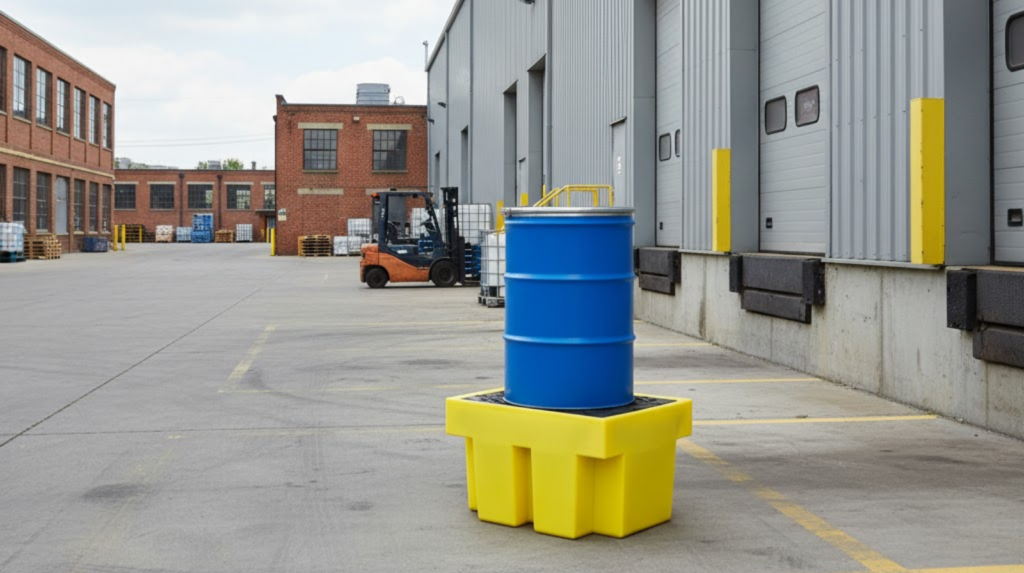
2. Open Bunds: These are exposed to the weather (e.g., a spill pallet with an IBC stored on it). Outdoor open bunds are often exposed to rainfall, meaning that water can gradually accumulate inside them.
Managing Water in Open Bunds
This accumulation of rainwater reduces your available storage capacity and increases the risk of an overflow during a spill (e.g., following heavy rain).
For this reason, rainwater levels must be monitored frequently, with excess water removed before it compromises containment.
Crucially, any water that has come into contact with chemical residues must be treated as contaminated and disposed of appropriately; not simply released back into the public sewer. Rainwater control is one of the most common compliance failings, making routine monitoring and correct disposal a critical requirement for open bunds.
4. Why Are Integrity Checks And Inspections Essential?
Essentially, a bund is only effective if it remains strong, impermeable and structurally sound. Regular inspections will help identify cracks, early-stage corrosion, settlement or chemical damage that could weaken the containment area. We recommend following a formal inspection schedule based on industry best practices, supported by clear records that demonstrate ongoing maintenance and responsible operations. Integrate integrity testing into your service schedule; this will provide confidence that the bund will perform as expected in an emergency, and is a key element of meeting your legal chemical bunding responsibilities.
5. What Equipment Should Be Stored Inside A Bunded Area?
The answer depends heavily on the type of bunded area you are referring to: a dedicated, enclosed bunded store or a large, open bunded yard area.
1. Dedicated Bunded Stores (Enclosed Units)
Bunded stores are primarily for the safe containment of IBCs and drums being transferred via forklift. Generally, no equipment should be permanently stored inside these units, as they are designed purely for liquid containment and storage volume. Storing unrelated objects restricts space and obstructs inspections.
2. Large Bunded Areas (Yard or Process Areas)
Only equipment that directly supports safe dispensing or handling procedures should be kept within a large bunded area.
Good Practice: Storing unrelated objects restricts space, obstructs routine inspections, and increases the likelihood of contamination.
Contamination Risk: Any equipment placed inside the bund must be compatible with the chemicals stored, as a chemical leak could melt or degrade incompatible items. Equipment must be maintained in good condition to prevent further leaks.
Find Out More
Being aware of your chemical storage bunding requirements will help you reduce environmental risks and maintain safe working practices. If you are interested in professional advice, on-site assessments or support selecting compliant bunding solutions, please contact Spillcraft today to enhance the safety and performance of your chemical bunded storage areas.