


Managing hazardous liquids safely begins with having the correct spill containment infrastructure in place.
Businesses using drums for oils, chemicals, or other stored liquids must provide the right number of secondary containment systems to be available when needed. Getting this calculation wrong can result in non-compliance, increased spill risk, and unnecessary disruption to your workflows.
By understanding how drum storage works, what the regulations require and how capacity should be assessed, you can answer the crucial question: how many drum spill pallets do I need?
What Are Drum Spill Pallets And How Does Containment Work?
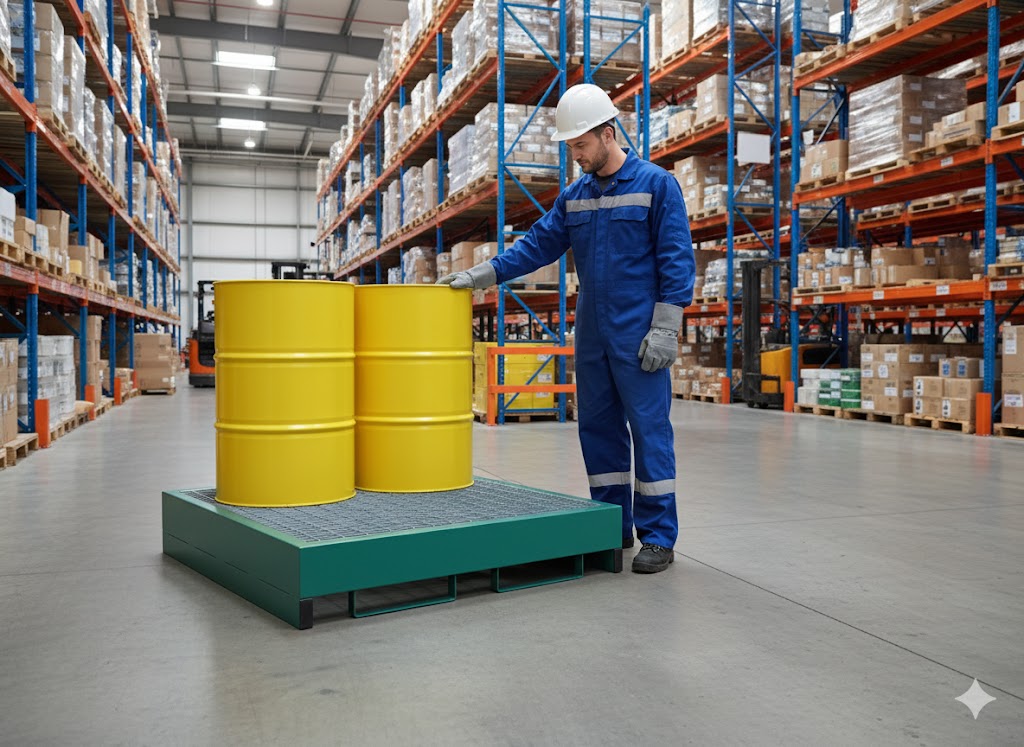
Before calculating numbers, let’s talk about the purpose and function of drum storage spill containment pallets. These pallets are designed to hold one or more drums with an integrated sump containment area beneath them. The sump collects any leaks, drips or seepage from the stored containers, preventing spills from spreading across the workplace floor or reaching drains.
A well-designed spill pallet must be strong, chemically resistant and capable of holding the full volume required for compliant containment. While common configurations include two-drum and four-drum models, the correct choice depends on:
The size of your storage area.
The nature of the substances being handled.
The daily movement of drums across your site.
Chemical compatibility (ensuring liquids that could react dangerously, potentially causing toxins or fire hazards, are never stored on the same pallet).
What Regulations And Standards Govern Spill Containment?
UK regulations set clear expectations on how drums containing hazardous liquids must be stored, and businesses are required to use secondary containment systems to prevent spills from reaching the environment.
One core principle applies across all types of drum storage: the containment system must hold at least 110% of the largest container stored within it or 25% of the total volume stored, whichever value is greater. This rule ensures that even a complete drum failure can be safely contained.
It also means that organisations must calculate their required number of containment units based on ensuring the required sump volume is met for the number of drums stored.
When planning their storage areas, the HSE expects operators to demonstrate clear control measures, create sufficient separation space between drums, and maintain appropriate access routes for inspections and emergency response.
Which Factors Influence The Number Of Spill Pallets Required?
‘How many drum spill pallets do I need’ depends on several operational and compliance factors.
Total Quantity: The first factor is the total quantity of drums being stored in one area. Sites holding larger numbers of drums may choose a combination of two-drum and four-drum pallets to maximise space efficiency while also ensuring that non-compatible liquids are never stored together on the same pallet to prevent the release of toxins or fire hazards should a leak occur.
Location: Another important factor is whether the drums are stored indoors or outdoors. External storage may require additional protection and a bunding plan that takes weather exposure into account (e.g., rain ingress and potential overspill risks).
Chemical Compatibility: This is critical because not all liquids can be safely stored beside each other. Storing incompatible substances on the same pallet is a serious hazard and must be strictly prohibited. Each substance should be carefully reviewed to determine whether a dedicated containment pallet is required.
Site Layout: The overall layout of the site, loading activities, and dispensing processes also influence how many pallets are needed to operate safely without overcrowding the workspace.
How Should Spill Response Equipment Be Integrated Into Your Storage Plan?
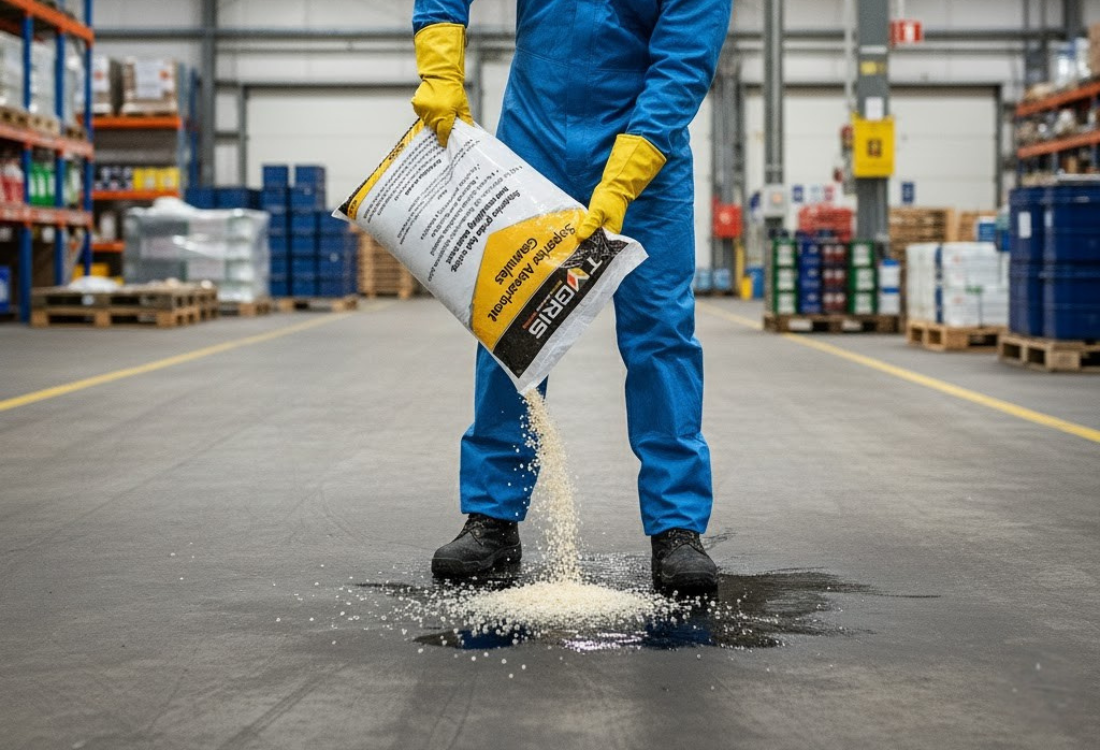
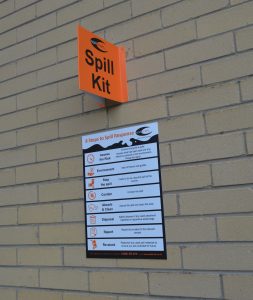
Spill containment is not limited to static storage. Effective control measures must also support safe handling, dispensing and emergency response procedures. This means that spill kits, absorbents and the appropriate PPE should be located close to the drum storage areas. Integrating spill response equipment into the same planning process allows any incident to be dealt with quickly and efficiently.
Choosing the right number of drum storage spill containment pallets should, therefore, align with your wider spill management strategy. If drums are frequently moved for production or decanting, additional pallets may be needed to support temporary storage or high-activity areas. A proactive approach to planning reduces the likelihood of incidents and fosters culture of safe drum handling.
What Next?
If you’d like professional guidance on selecting the right drum spill pallets or designing a compliant drum storage area, please contact Spillcraft today for expert support tailored to your site requirements.