
Safe Contractor Approved

BSIF Registered Safety Supplier

Supporting ISO14001 COMPLIANCE

For many HSE managers and site directors, the word audit triggers a sense of dread. Whether it’s an internal review or an external inspection by a regulatory body, the pressure to demonstrate total compliance is immense. One of the most common reasons sites fail these assessments is a lack of demonstrated staff competency during real world scenarios, particularly when responding to leaks, near misses, or equipment failures. Having rows of expensive absorbent mats and spill kits means very little if your team doesn’t know how to use them effectively or, more importantly, how to prevent a leak from happening in the first place.
Read more: Why Spill Prevention Training Reduces Audit Failures

Investing in spill prevention training is the most effective way to bridge the gap between having a policy on paper and having a safe, compliant workplace. When an auditor walks onto a site, they’re looking for evidence that your team is proactive. They want to see that the people on the shop floor understand the risks associated with the liquids they handle every day, from IBCs in a chemical plant to hydraulic oil in a plastic injection moulding facility.
An audit failure usually stems from a non-conformance found during a site walk around. This could be something as simple as a missing drain cover or an unlabelled COSHH cabinet. However, the most damaging non-conformances are often related to human behaviour. If an auditor asks a staff member what they would do if a delivery hose leaked and that staff member hesitates, you have a problem.
Comprehensive spill prevention and control measures rely on a workforce that is confident in relevant legislation and site procedures. Training ensures that everyone from the warehouse to the boardroom understands the Oil Storage Regulations 2001 and DSEAR 2002. By educating staff on how to identify near misses, such as a slightly weeping valve or a dented drum, you stop an emergency before it begins.
For businesses holding ISO 14001 certification, training is a core requirement. This standard places a heavy emphasis on environmental stewardship and requires organisations to demonstrate that any person performing tasks that could cause a significant environmental impact is competent.
Competency is more than just attending a 10-minute toolbox talk once a year. It involves:
A plan is only as good as the people executing it. While it’s essential to have a written spill prevention and response plan, it must be a living document that every supervisor and operative understands. This plan should outline the specific steps to be taken the moment a leak is detected, and it should focus heavily on the idea that prevention is better than cure.
A high-quality plan includes:
New managers often enter a business looking to challenge outdated processes and make an immediate impact. One of the quickest ways to impress and improve site safety is to overhaul the existing spill culture. Outdated processes often involve using cheap, low-quality absorbents that fail to perform or neglecting small leaks in sectors like plastic manufacturing.
Focusing on specialised instruction allows new managers to put a system in place that works across the whole group. It empowers supervisors to take ownership of their specific areas, ensuring that COSHH cabinets are stocked and that secondary containment is never bypassed for the sake of production speed.
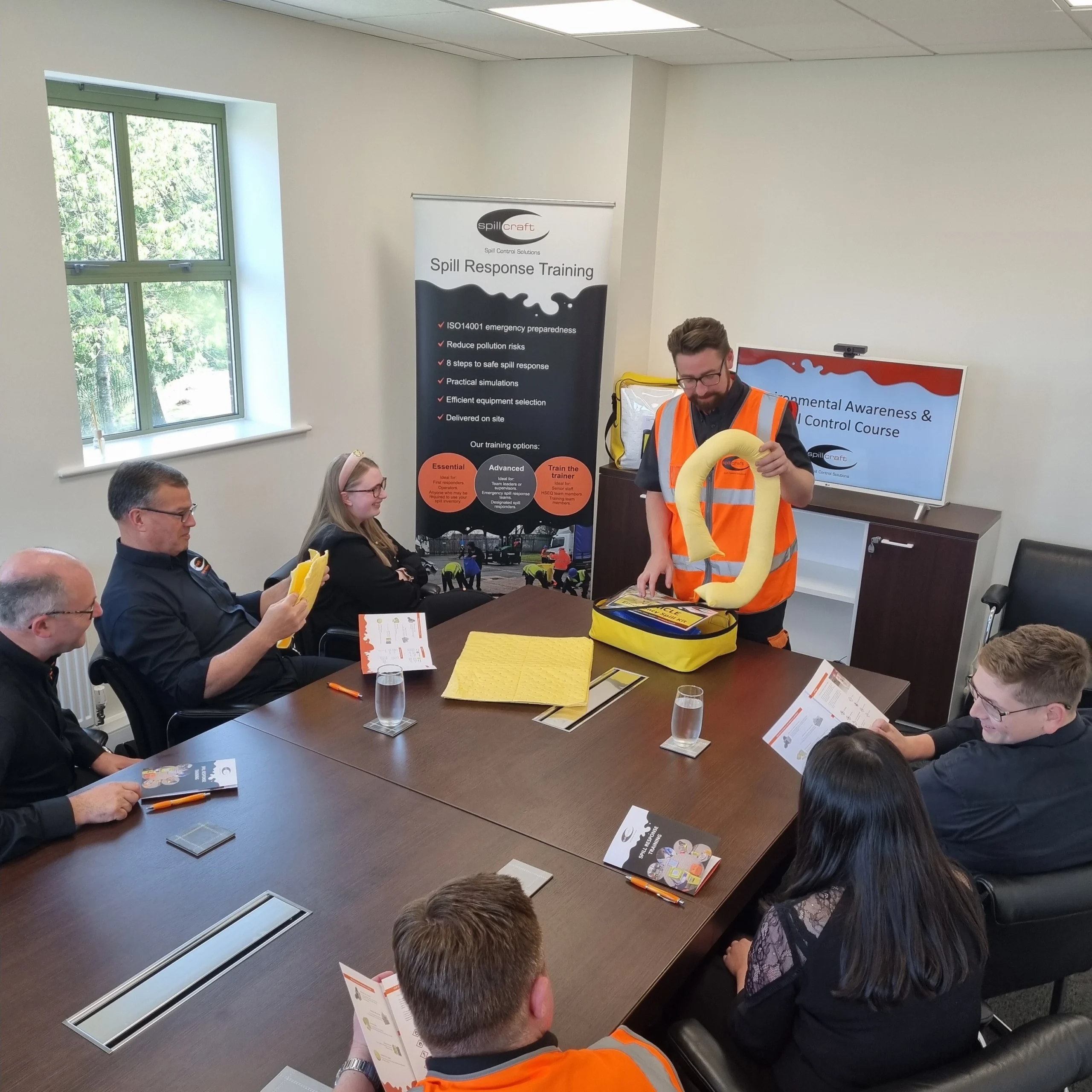
Integrating spill drills into your routine is the best way to test the effectiveness of your spill prevention training.
These drills don’t need to halt production or cause massive disruption. They can be handled as part of a scheduled safety hour. By simulating a delivery hose leak or an IBC rupture, you can identify gaps in your equipment or knowledge before a real emergency occurs. It allows staff to practice using fast acting absorbent powders that leave floors slip-free or drain mats for waterway protection in a controlled environment.
Audits do not have to be a source of stress. When your team is properly trained, you can walk through your site with confidence, knowing that your processes are robust and your staff are competent. Whether you’re dealing with COMAH status changes or simply want to protect your brand from the bad publicity of a chemical leak, the answer lies in education. Contact us today to learn more about spill response training and find out how we can support your team to create a safer workspace.