
Safe Contractor Approved

BSIF Registered Safety Supplier

Supporting ISO14001 COMPLIANCE

Unlike a controlled factory floor, a retail store is filled with unpredictable factors. When a bottle of olive oil shatters in an aisle, or a fridge unit leaks in a supermarket, it’s a significant health and safety risk. Without a formal spill response plan, a minor accident can quickly escalate into a legal and financial nightmare.
For retail managers, the priority is always public safety. While industrial sites focus heavily on environmental fines and COSHH regulations, retail sites must prioritise preventing the immediate danger of injury. Implementing a effective retail spill response plan will protect your customers from harm and your business from legal implications and bad publicity that could follow a public accident.
Read more: Why Every Retail Site Needs A Formal Spill Response PlanIndustrial sites often deal with IBC ruptures or delivery hose leaks in secluded areas where only trained staff are able to go. In contrast, retail spills happen in the public eye. This means the time between a spill occurring and someone potentially slipping on it is incredibly short.
The goal in a shop or hospitality setting is to neutralise the hazard instantly. Industrial absorbents often leave a slippery residue or take time to work, making them unsuitable for a busy shop floor. Retailers need fast-acting products, such as specialised powders, that leave the floor completely slip-free and dry the moment they’re applied. This immediate action is the most effective way to prevent slips, trips and falls in an environment where you cannot simply cordon off an area for an hour or two.
When considering how can slips, trips and falls be prevented, one must look at the cost of failure. According to the Health and Safety Executive (HSE), slips and trips are the most common cause of major injuries in the workplace, costing UK businesses over £500 million a year. For a retailer, a single claim can outweigh the annual profit of an entire branch.
Beyond the direct legal costs and insurer requirements, there is the hidden cost of brand protection. In the age of social media, a video of a customer falling in your store can go viral in minutes. This damage to your reputation is often harder to repair than a broken bone. Having a structured spill response plan ensures that staff act with confidence and speed, demonstrating to both the public and insurers that you take their safety seriously.
Not all spills are created equal, and a one-size-fits-all approach often leads to equipment inventory issues. Retail managers must account for a variety of substances:
By identifying these triggers in advance, you can ensure that your spill control equipment is actually fit for purpose. Using cheap, generic absorbents that fail to soak up thicker liquids is a common frustration that leads to wasted labour and prolonged risk.
In public-facing sectors like supermarkets or hospitals, the priority is preventing injury and liability. However, to maintain a defendable compliance trail for insurers, the sequence must follow our 8 step priority order:
Immediately Guard the Area. One staff member must stay with the spill to warn customers while another fetches the equipment; never leave a spill unattended to prevent slip and fall injuries.
Quickly check for floor drains or sensitive areas where liquids, such as milk or cleaning chemicals, could enter the water system and cause environmental damage.
Isolate the source, such as a leaking bottle or damaged packaging, to prevent further spread across the shop floor.
Use signage or temporary barriers to restrict public access until the area is dry.
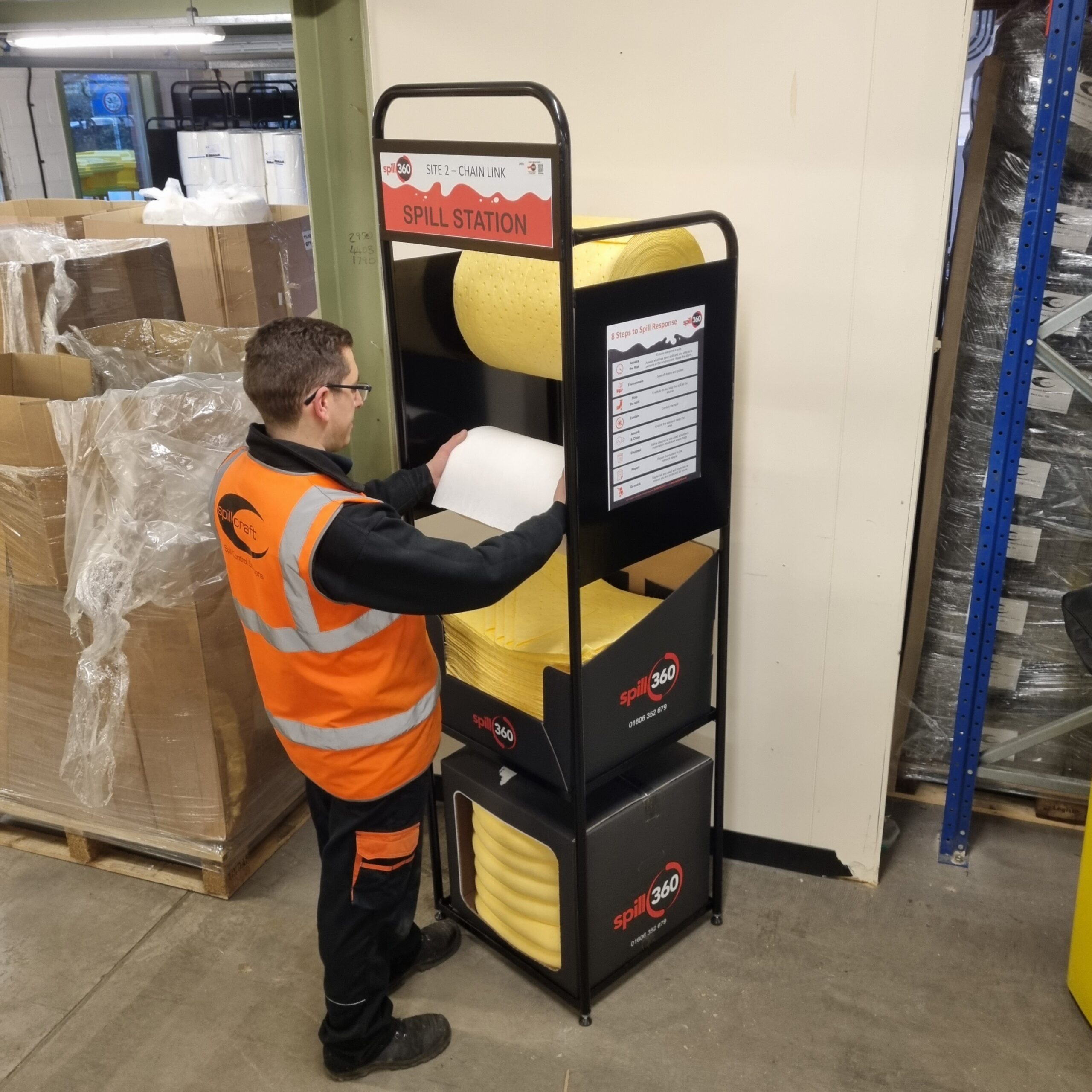
Apply Fast-Acting Absorbent from the nearest station. Use high-quality powder (like Spill-Aid) or mats designed to leave the floor surface safe for walking immediately.
Clear and Clean by sweeping up the absorbed material. Ensure waste involving food or glass is handled safely and classified according to hazardous waste regulations where applicable.
Log the incident in your records. Documenting your rapid, professional response is vital for defending against future insurance claims or bad publicity.
Immediately restock the spill station to ensure the site is ready for the next incident.
The most effective way to manage spills is to prevent them from becoming accidents.
A key factor involves moving away from a mop and bucket mentality, which often just spreads the liquid and makes the floor wetter. Instead, retailers should look at proactive systems.
Strategic placement of equipment is key. An operative should never have to run to the back of a warehouse to find a kit. Furthermore, providing staff with tools like checklists and SOP templates ensures that even new employees know how slips, trips and falls can be prevented without needing constant supervision.
By implementing a formal spill response plan, you protect your customers, your employees, and your bottom line.
Our passion is spill response and our team are ready to discuss your spill issues and requirements to provide you with the correct retail spill response plan.
If you would like guidance and advice Contact us today
Learn more about spill kits and how we can support you to create a safer retail space.