
Safe Contractor Approved

BSIF Registered Safety Supplier

Supporting ISO14001 COMPLIANCE

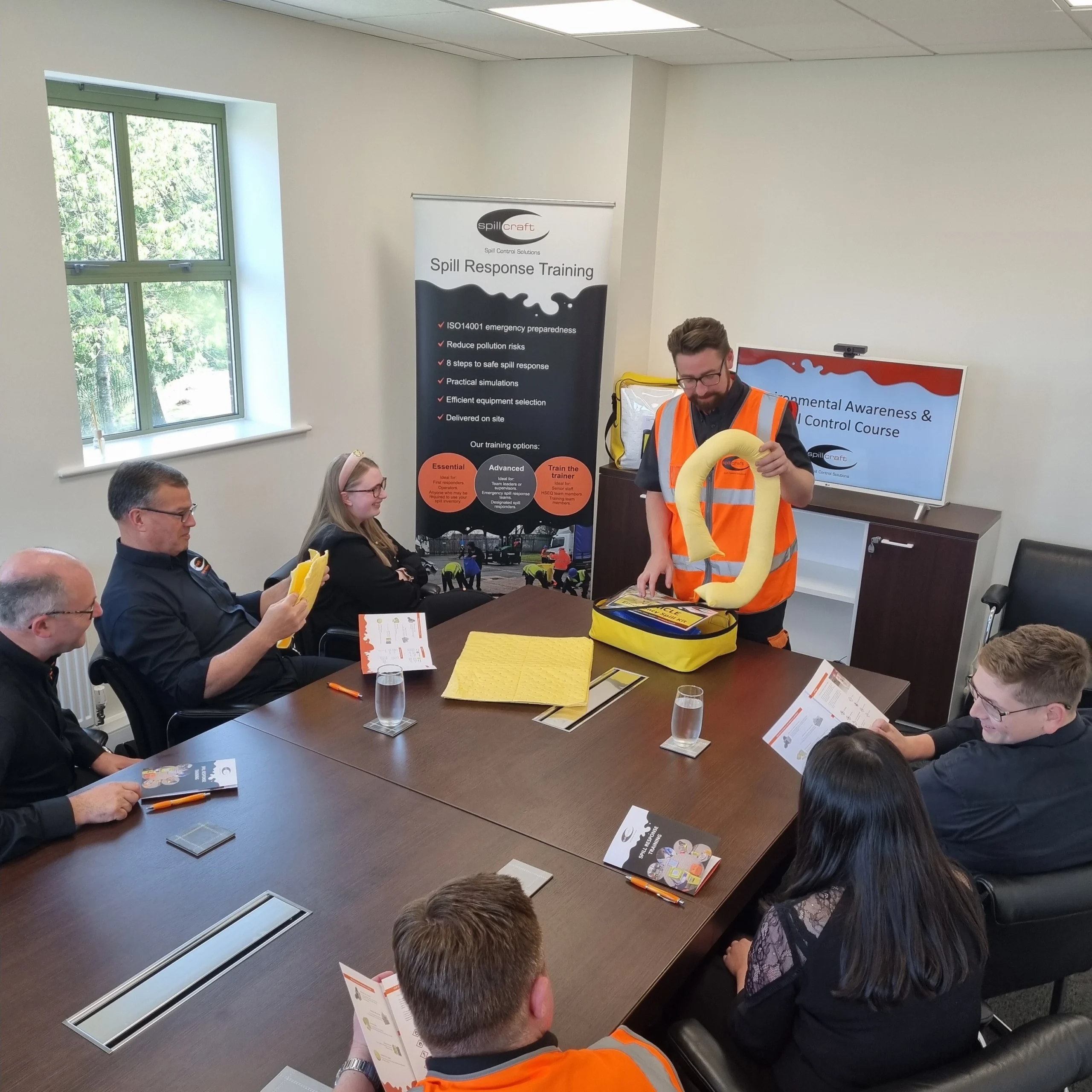
Spill training is sometimes treated as a narrow emergency topic: where the kit is stored, what PPE to wear and who to call, and so on. Within an ISO 14001 environmental management system, however, it has a wider role to play in supporting competence, operational control, emergency preparedness and continual improvement.
In this article, we look at the main benefits of spill prevention training and how it can help you achieve your ISO 14001 environmental goals.
Read more: 5 Benefits Of Spill Prevention Training For ISO 14001 Environmental GoalsISO 14001 requires organisations to determine the necessary competence from people whose work affects environmental performance, and to retain appropriate evidence. Unfortunately, spill risk is rarely confined to one department. Warehouse operatives, engineers, drivers, cleaners and contractors may all need to handle liquids or work near drainage routes. Training matrices, attendance records, emergency response plans, refresher intervals and role-specific content provide auditable evidence that competence has been defined and maintained.
Training can improve the quality and order of first actions during a spill, which often determines whether the incident remains minor or propagates. To ensure site safety and compliance, responders should follow our 8-step priority order:
Many reportable pollution events begin as relatively small releases that find their way into the drainage system. Staff who know where the drains are located, how interceptors function, and how to deploy drain covers or booms quickly are more likely to interrupt that pathway before off-site impact occurs. This is particularly relevant in external loading bays, fleet car parks, and external service areas where liquids can travel further than expected during rainfall.
The direct cost of absorbents or contractor clean-up is only one part of an incident cost, with secondary costs extending to:
An efficient emergency response plan and well-trained in-house response can often reduce the escalation chain, especially if rapid source isolation prevents wider contamination.
Training exercises frequently reveal weaknesses elsewhere in the system, such as empty kits, incompatible absorbents, unclear labels, inaccessible shut-off points, outdated contact lists or missing SDS information. These findings can feed corrective actions, procurement changes, signage improvements and updates to emergency procedures. Within an ISO 14001-aligned environmental management system, training should be linked to your organisation’s identified environmental aspects, legal compliance obligations, operational controls and emergency preparedness arrangements. Spill risks associated with fuels, oils, chemicals or waste liquids should therefore influence who is trained, what scenarios are covered, and how competence is evaluated.
Training outcomes can also be measured against wider system objectives such as reducing spill frequency, preventing drain contamination, improving near-miss reporting or lowering hazardous waste volumes generated through incidents. Findings from drills or real events should also feed into corrective actions, procedure updates and management review, creating evidence of continual improvement rather than a standalone training event. When integrated properly, spill training becomes a working control within your management system, increasing environmental spill compliance, readiness, and audit confidence under ISO 14001.
Spill training is one of the few controls that directly influences how incidents unfold in real time. Spillcraft delivers practical, role-specific spill training designed around your site, your risks, and your environmental objectives. So, if you’re reviewing your ISO 14001 approach or want to strengthen response capability across your team, please contact one of our experienced team members to explore suitable training options.