
Safe Contractor Approved

BSIF Registered Safety Supplier

Supporting ISO14001 COMPLIANCE

When you work with oils, chemicals, or hazardous liquids, spills are a risk you live with every day. You can’t predict when they’ll happen, unfortunately, but you can decide how well prepared you are. A thorough plan for spill control and containment gives you the confidence that, if something does go wrong, you can take quick and effective action to protect your workers, your site, and the environment.
This article talks you through what to consider when building a plan that actually works for your operations.

Before you start writing your plan, it helps to understand what spill control and containment really mean in practice.
Effective control starts long before a spill takes place, with good storage habits, accessible spill kits, and the right spill control equipment in place. When you understand how spills behave in your environment, you can build a plan that’s realistic, practical, and ready for real-world situations.
Every site has its own spill risks, so to understand yours, take a close look at:
This assessment will give you a clearer picture of where you’re most vulnerable. With that insight, you can position your spill kits more effectively, improve storage layouts, and create a site spill control strategy that protects your environment; not just in theory, but in day-to-day operations.
A good spill control plan focuses on how your site prevents and contains spills as part of everyday operations. For instance, start by mapping the natural liquid pathways across your site so you can place permanent containment features, such as bunds, drip trays, raised thresholds, or spill pallets, where they will have the greatest impact. Establish clear operating rules for high-risk tasks like decanting or refuelling, supported by a practical spill kit management procedure that outlines where kits are kept and how they are maintained, and include simple visual guides or site diagrams so that your team can quickly understand where important containment structures and equipment are located. By combining physical infrastructure, good workflow design, and straightforward documentation, your spill control plan becomes a functional tool that supports safer, more controlled liquid-handling every day.
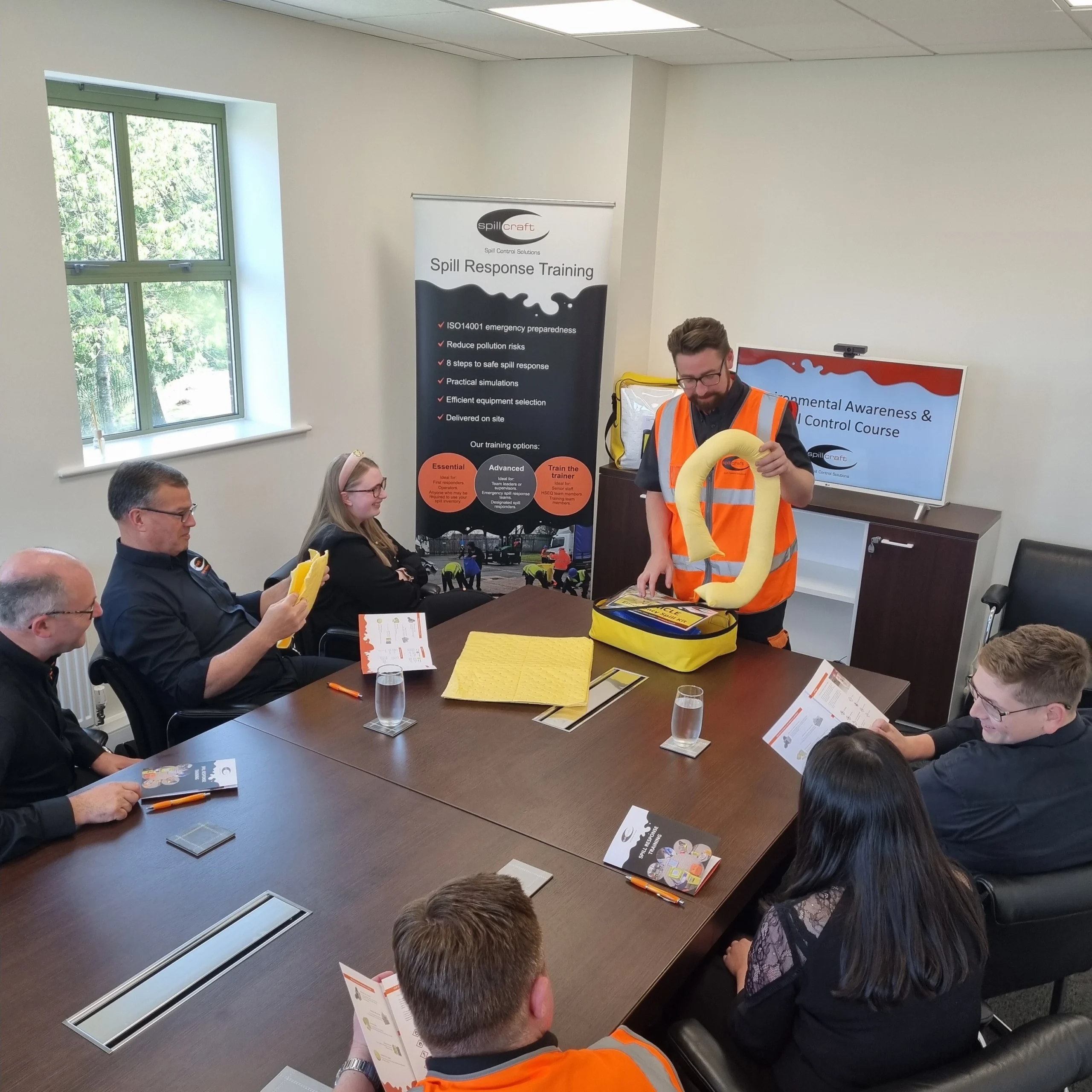
When you think of training, you might picture emergency drills or rapid response actions. Spill containment training, however, is different. It’s about teaching your team how to work in a way that naturally prevents spills from spreading before they become safety incidents.
Rather than focusing on “what to do when something goes wrong,” containment training helps your team understand:
In this way, training becomes less about memorising procedures and more about building an instinctive awareness of how liquids behave on your site. The result is a workforce that contributes to site spill control through their everyday decisions, not just during rare emergencies.
When you take a strategic approach to spill control and containment, combining practical infrastructure with smart processes and confident staff, you create a safer and more resilient site. Find out more, please contact us today by calling 01606 352 679, or [email protected] to send a message.