Understanding ISO 14001 and Spill Response
ISO 14001 requires you to identify all environmental risks, assess their significance, and develop operational controls that prevent or minimise impact. The management of spills, whether involving hazardous chemicals, oils, or seemingly ‘harmless’ liquids like milk, falls directly under:
- Clause 6.1.2: Environmental Aspects: You must recognise the potential for a release of any substance as an environmental aspect. This includes assessing the severity of possible spills, regardless of whether the liquid is classified as hazardous, as any substance that enters a watercourse can cause significant environmental degradation.
- Clause 8.1: Operational Planning and Control: You must implement planned controls to prevent spills and manage any loss of containment safely. This involves having physical barriers or procedures in place for all liquids that could negatively impact local drainage or soil quality.
- Clause 8.2: Emergency Preparedness and Response: You must maintain documented procedures for responding to incidents, test them regularly, and demonstrate that your workforce is competent in spill response.
This means that your spill arrangements are not just practical tools, but are also auditable components of your environmental management system. An auditor will look for evidence that your response measures cover all potential pollutants handled on-site and that these measures are suitable, maintained, and understood by your team.
Spill Response Planning And Spill Prevention Training
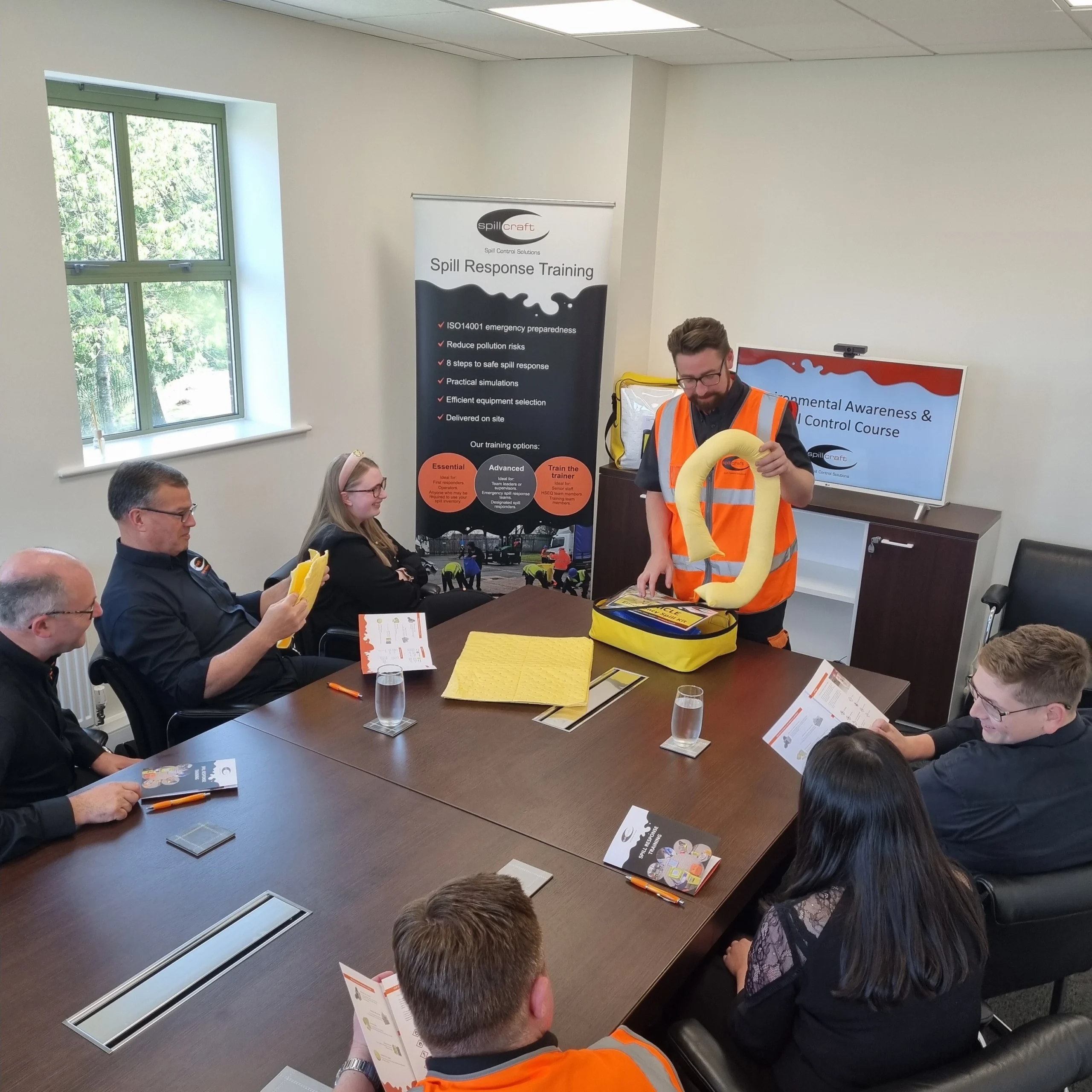
To satisfy ISO 14001 audit requirements, your spill response plan and spill prevention training strategy must work together as a unified control system. Auditors expect a well-documented, site-specific procedure based on a formal spill site survey, with clear operational controls that match your risks, defined roles for responders, and scenario-based instructions for different spill types. Alongside this, you must also provide verifiable training records demonstrating workforce competence, refresher schedules, and evidence that staff understand their responsibilities during a spill emergency response. Compliance relies not on paperwork alone but on your ability to show that your procedures are implemented, practiced, and continuously improved through drills, incident reviews, and EMS updates.
Emergency Oil Spill Response Readiness
For sites handling fuels, lubricants, hydraulic oils, or any petroleum-based products, auditors place significant weight on how you manage oil-specific emergencies due to the high environmental impact these spills can create. An effective emergency oil spill response system must demonstrate both preparedness and control under ISO 14001. For example:
- Immediate isolation protocols such as stopping pumps, closing valves, and shutting off ignition sources. Auditors will want to see clear written instructions backed by real competence among your staff.
- Drain and surface protection controls, including dedicated oil-only absorbents, drain covers, booms, and portable bunding. Oil’s ability to travel rapidly along surface films means you must show that your equipment is correctly matched to hydrocarbon behaviour.
- Evidence-based containment strategy, where oil-only absorbents (which float on water) are used to protect watercourses, intercept separators, or storm drainage routes.
- Tiered escalation procedures, specifying when and how incidents are reported internally, to environmental regulators, or to external responders.
- Documented waste handling routes, showing how contaminated oil, absorbents, and PPE are stored, transported, and disposed of in line with hazardous waste legislation.
- Demonstrated testing of arrangements, such as live drills, desktop exercises, or spill simulations. Auditors want to see performance data, not assumptions, to confirm your site can execute its emergency actions quickly and safely.
The auditor’s key question is simple: Can you prove that your site can control an oil spill before it reaches a drain, watercourse, or sensitive receptor? Every element of your emergency procedure should help you answer “yes” with confidence and evidence.
What next?
Passing an ISO 14001 audit is not about having a spill plan on paper; it requires you to demonstrate structured, risk-driven system that prevents releases and controls them effectively when they occur. With a detailed spill site survey, a robust spill response plan, documented spill prevention training, and proven arrangements for spill emergency response, you strengthen your entire EMS and give auditors clear and unambiguous evidence of compliance.
To find out more about ISO 14001 standards and how having access to the right spill control products can help, please get in touch with Spillcraft today by clicking here.
Image source: Canva