
How Spill Kits Support Your Pollution Incident Response Plan?
A Pollution Incident Response Plan (PIRP) is a documented process that outlines how your site prevents, contains, and responds to spills. Whether you’re managing a



A Pollution Incident Response Plan (PIRP) is a documented process that outlines how your site prevents, contains, and responds to spills. Whether you’re managing a

On a COMAH-registered site, you’re already operating under some of the most stringent hazardous substance regulations in the UK. You’ve got emergency plans, risk assessments,
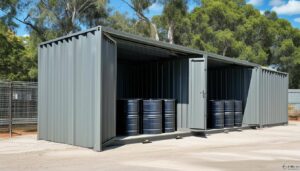
If you store hazardous liquids at your site, bunding is a legal requirement. And yet, bunding failures remain one of the most common reasons businesses
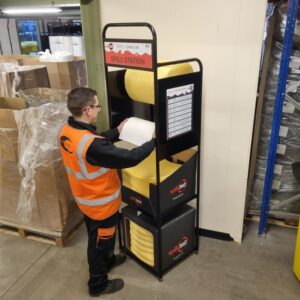
Spill response is something many workplaces think about only after an incident occurs. In reality, being prepared makes all the difference.Having the right spill products
In a busy manufacturing environment, uninterrupted production is critical to maintaining output, revenue, and compliance. Whether you’re overseeing a chemical processing plant or a high-volume

Spill response plans and spill risk assessments address different stages of the same problem. Response planning focuses on what happens after a release occurs, while
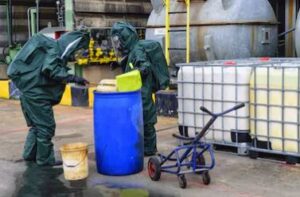
When a chemical spill occurs, the absorbent you choose has a significant impact on how quickly and safely you get it under control. Using the
Proud to be affiliated with the BSIF The British Safety Industry Federation (BSIF) is the leading trade body within the UK’s safety industry. It represents
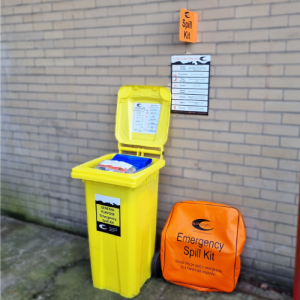
If you store, handle, or transport liquids, it is vital that you have a robust response procedure in place to manage spills. Poor management of
Spill360, the simple, convenient, cost-effective and compliant answer to managing spills and spill waste removal. We understand the common frustrations of spill control management, that

An Environmental Management System (EMS) is the procedures and policies your businesses utilises to implement your environmental health and safety policy. It provides the framework
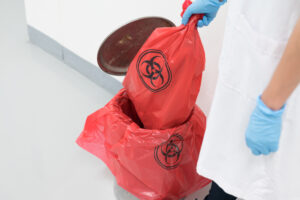
Body Fluid Spills People often think of hazardous spills being dangerous chemicals or hazardous liquids, but bodily fluids can be equally as dangerous if you
A Pollution Incident Response Plan (PIRP) is a documented process that outlines how your site prevents, contains, and responds to spills. Whether you’re managing a

Achieving and maintaining ISO 14001 accreditation is a significant milestone for any organisation. It signals to stakeholders, customers and regulators that you’re committed to managing
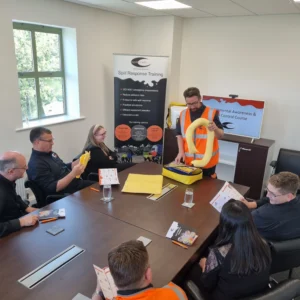
Spill training is sometimes treated as a narrow emergency topic: where the kit is stored, what PPE to wear and who to call, and so
On a COMAH-registered site, you’re already operating under some of the most stringent hazardous substance regulations in the UK. You’ve got emergency plans, risk assessments,
If you store hazardous liquids at your site, bunding is a legal requirement. And yet, bunding failures remain one of the most common reasons businesses
Spill response is something many workplaces think about only after an incident occurs. In reality, being prepared makes all the difference.Having the right spill products